
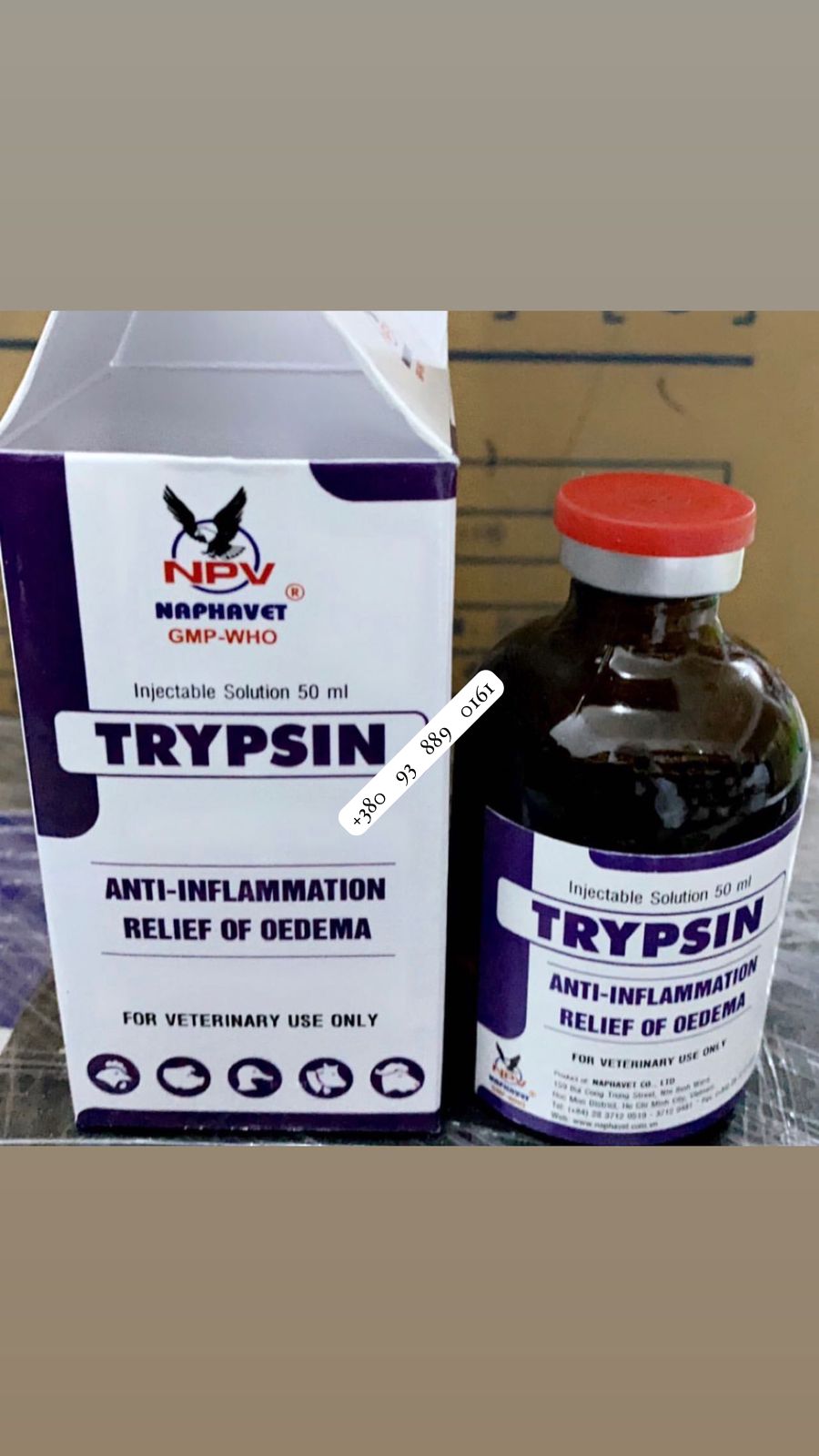
TRYPSIN
Original price was: $45.00.$40.00Current price is: $40.00.
Trypsin and alpha-chymotrypsin injection for oedema and painful swelling after surgery, and supportive care in mastitis, arthritis and airway inflammation.
Trypsin is an injectable enzyme preparation containing trypsin and alpha-chymotrypsin, used to reduce oedema and painful swelling. It works by a mechanism entirely different from corticosteroids and non-steroidal anti-inflammatories, which is why it has a role where those are unsuitable or insufficient.
Composition
Active substances: alpha-chymotrypsin and trypsin. Both are proteolytic enzymes — proteases that break down protein. Given by injection, they act systemically on the protein-rich fluid and fibrin that accumulate in inflamed and swollen tissue.
Indications
Trypsin is used in cattle, poultry, dogs, cats and other species for:
- reduction of oedema and painful swelling following surgery;
- supportive treatment of mastitis;
- supportive treatment of arthritis;
- supportive treatment of respiratory inflammation — asthma, bronchitis, pneumonia and sinusitis.
How it works
Proteolytic enzymes break down the fibrin and protein debris that hold inflammatory exudate in place. As that material is digested, the trapped fluid can drain and the swelling subsides, which in turn relieves the pressure causing the pain. Because the enzymes act on the fluid rather than on the inflammatory signalling, they do not suppress the immune response and they do not mask infection the way a corticosteroid does — a meaningful advantage when inflammation is accompanied by a bacterial problem being treated in parallel.
Presentation and storage
Sterile injectable solution for intramuscular administration. Store in a cool place, protected from direct sunlight, at the temperature given on the label. Do not freeze. For a multi-dose vial, use within five to seven days of the first withdrawal. Disinfect the stopper before each withdrawal and use a sterile needle and syringe. Keep out of reach of children. For veterinary use only.
Important
Intramuscular injection; a repeat injection after twelve to twenty-four hours may be indicated in some cases, on veterinary direction. Dose differs by species and body weight — follow the label. Enzyme preparations are supportive treatment: they reduce swelling, but they do not treat the infection, the injury or the underlying disease that produced it, and a case that is not improving needs a diagnosis rather than a repeat injection. Check the status of enzyme preparations under racing and competition rules before treating a competing animal. Observe the withdrawal period stated on the label for animals destined for food production. This page is product information, not veterinary advice.
Related products
-
Blood & Circulation
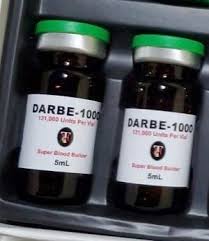
DARBE 1000
Original price was: $45.00.$40.00Current price is: $40.00. Add to cart -
NSAIDs & Pain Relief
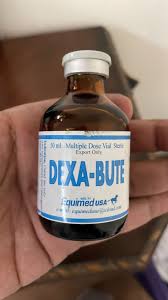
BUTA-DEX
Original price was: $50.00.$40.00Current price is: $40.00. Add to cart -
Vitamins, Minerals & Metabolic Support
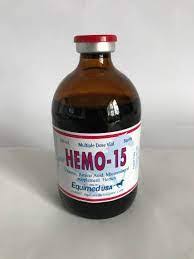
HEMO 15
Original price was: $60.00.$55.00Current price is: $55.00. Add to cart -
Anti-inflammatory & Corticosteroids
PREDNICURE 1%
Original price was: $55.00.$50.00Current price is: $50.00. Add to cart

Reviews
There are no reviews yet.