
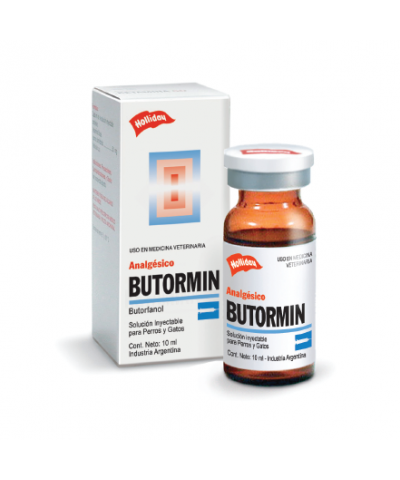
Butormin – 10 ml
Original price was: $80.00.$70.00Current price is: $70.00.
Key Benefits
- Potent analgesic action for moderate to severe pain
- Minimal cardiovascular effects
- Reduced risk of respiratory depression compared with traditional opioids
- Compatible with common sedative and anesthetic protocols
- Suitable for horses, camels, dogs, and cats
- Reliable perioperative pain management
BUTORMIN 10 ml is a veterinary injectable analgesic containing butorphanol tartrate, a synthetic opioid agonist-antagonist recognized for its potent analgesic properties and minimal cardiovascular impact. It provides effective management of moderate to severe pain and is widely used in surgical, perioperative, and anesthetic protocols across multiple animal species.
Pharmacological Action
Butorphanol offers a unique dual mechanism of action:
- Kappa receptor agonist: Produces effective spinal analgesia and sedation with reduced respiratory depression.
- Mu receptor antagonist: Minimizes common opioid-related adverse effects, including excessive respiratory depression, euphoria, and physical dependence.
This balanced pharmacological profile makes BUTORMIN® a reliable and well-tolerated option for veterinary pain management.
Composition
Each 100 ml contains:
- Butorphanol Tartrate: 1.02 g
- Excipients: q.s.
Indications
BUTORMIN® is indicated for:
- Pre-, intra-, and post-operative analgesia
- Pain management associated with surgical procedures
- Use as part of premedication protocols
- Enhancement of sedation when combined with midazolam, diazepam, or acepromazine
- Combination with ketamine as part of anesthetic protocols
Dosage and Administration Of Butormin – 10 ml
Administer by intravenous (IV), intramuscular (IM), or subcutaneous (SC) injection as directed by a veterinarian.
Horses (Equine)
Analgesia / Sedation
- 0.02–0.05 mg/kg IV or IM
- Typical adult horse dose: 10–25 mg per animal, depending on body weight and clinical response
Camels (Dromedaries)
Analgesia
- 0.02–0.04 mg/kg IV or IM
Dose adjustments should be made according to body weight, condition, and individual response.
Cats (Felines)
Premedication
- 0.1–0.2 mg/kg IM
Analgesia
- 0.1–0.2 mg/kg IV or IM
- 0.4 mg/kg SC
Dogs (Canines)
Premedication
- 0.1–0.2 mg/kg
Analgesia
- 0.2–0.4 mg/kg IV, IM, or SC
Dosages are provided as general guidelines and may be modified according to veterinary judgment and patient requirements.
Contraindications and Precautions
Do not use in animals with:
- Severe hepatic disease
- Advanced renal failure
- Congestive heart failure
- Obstructive respiratory disorders
Use with caution in:
- Geriatric animals
- Patients with hypothyroidism
- Animals with significant renal impairment
Not recommended for use in pregnant females unless specifically advised by a veterinarian.
Adverse Reactions
Possible adverse effects include:
- Mild ataxia
- Reduced appetite (anorexia)
- Occasional diarrhea
- Decreased gastrointestinal motility
In cats, transient excitement or mydriasis (pupil dilation) may occasionally occur.
Key Benefits
- Potent analgesic action for moderate to severe pain
- Minimal cardiovascular effects
- Reduced risk of respiratory depression compared with traditional opioids
- Compatible with common sedative and anesthetic protocols
- Suitable for horses, camels, dogs, and cats
- Reliable perioperative pain management
For veterinary use only.
Related products
-
Anti-inflammatory & Corticosteroids
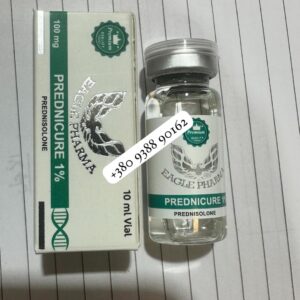
PREDNICURE 1%
Original price was: $55.00.$50.00Current price is: $50.00. Add to cart -
Anti-inflammatory & Corticosteroids
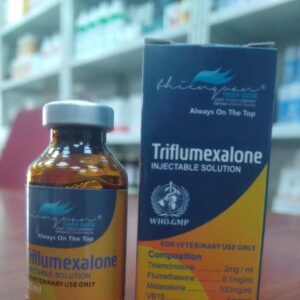
Triflumexalone injection
Original price was: $45.00.$40.00Current price is: $40.00. Add to cart -
Anti-inflammatory & Corticosteroids
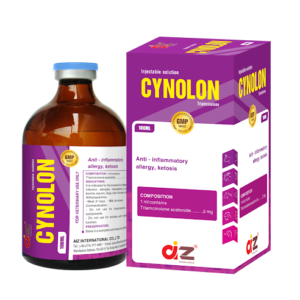
Cynolon
Original price was: $40.00.$35.00Current price is: $35.00. Add to cart

Reviews
There are no reviews yet.