
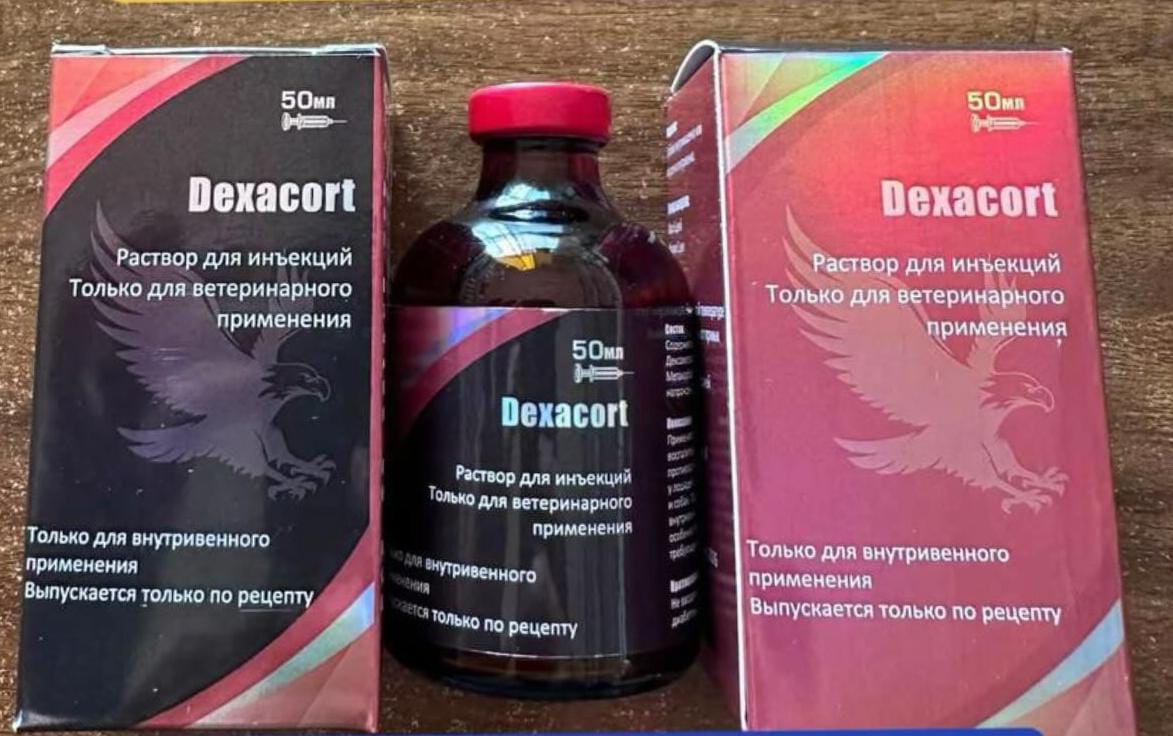
Dexcort 50mL
Original price was: $70.00.$65.00Current price is: $65.00.
Injectable corticosteroid for horses and camels combining flumethasone and dexamethasone, for muscle pain, joint pain, tendonitis and bursitis.
Dexcort is an injectable corticosteroid preparation for veterinary use, supplied in a 50 ml multi-dose vial. It combines two glucocorticoids in one solution rather than relying on a single steroid, and is used in horses and camels for painful inflammation of muscle, tendon and joint.
Composition
Each 50 ml vial contains flumethasone 0.5 mg and dexamethasone 10 mg with excipients. The two steroids differ in potency and in how quickly they act: flumethasone is the more potent of the pair by weight, dexamethasone the more familiar workhorse glucocorticoid. Confirm the figures against the vial label and carton before use, as presentations vary between batches and markets.
Indications
Dexcort is indicated for inflammatory and painful conditions of the musculoskeletal system in performance horses and camels:
- muscle pain and soreness after work or overexertion;
- joint pain and inflammatory joint disease;
- tendonitis and inflammation of the tendon sheath;
- bursitis and inflammation of soft tissue around a joint;
- other inflammatory conditions of the locomotor system that respond to glucocorticoids.
How it works
Glucocorticoids act on the inflammatory cascade early, before the painful stage. They reduce the migration of inflammatory cells into damaged tissue, limit the release of inflammatory mediators, and lower capillary permeability, so less fluid moves into the tissue. The practical result is less swelling, less heat and less pain. Because this is suppression rather than repair, the underlying injury still needs rest and a treatment plan — a horse that feels sound on a corticosteroid is not a horse that has healed.
Presentation and storage
Sterile injectable solution, 50 ml multi-dose vial. Store in the original carton, protected from light, at the temperature given on the label. Do not freeze. Disinfect the stopper before each withdrawal and use a sterile needle and syringe every time. Keep out of reach of children.
Important
Corticosteroids mask the signs of underlying infection, affect glucose and insulin regulation, and are not suitable in every animal — particularly those at risk of laminitis, those with an active infection, and animals in late pregnancy. Combining a corticosteroid with a non-steroidal anti-inflammatory raises the risk of gastrointestinal and renal injury; do not stack the two without veterinary direction. Route, dose and duration must be set by the attending veterinarian for the individual animal. Corticosteroids are controlled substances under the rules of most racing and competition authorities and carry detection times — check the applicable rules before treating a competing animal. Withdrawal periods apply to animals destined for food production. This page is product information, not veterinary advice.
Related products
-
Hormones & Reproduction
strogen 10ml
Original price was: $35.00.$30.00Current price is: $30.00. Add to cart -
Anti-inflammatory & Corticosteroids
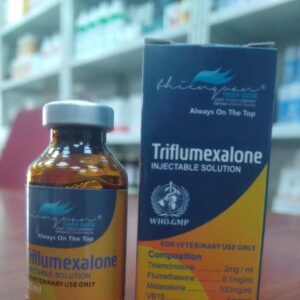
Triflumexalone injection
Original price was: $45.00.$40.00Current price is: $40.00. Add to cart

Reviews
There are no reviews yet.