
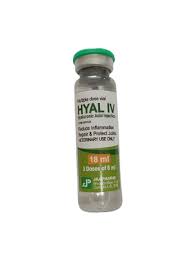
HYAL IV 18ml
Original price was: $60.00.$55.00Current price is: $55.00.
Intravenous hyaluronic acid, 18 ml, for joint dysfunction associated with non-infectious synovitis in horses. Supports synovial fluid viscosity.
Hyal IV is an injectable hyaluronic acid solution in an 18 ml presentation, used in horses for joint dysfunction associated with non-infectious synovitis. It is given intravenously rather than into the joint itself, which is what distinguishes it from intra-articular hyaluronate and makes it usable where several joints are involved or where injecting the joint is not appropriate.
Composition
Active substance: hyaluronic acid (sodium hyaluronate). Hyaluronic acid is a natural component of synovial fluid and articular cartilage — it is what gives healthy joint fluid its viscosity. The concentration per millilitre is stated on the vial label.
Indications
Hyaluronate preparations are used in horses, and by veterinary direction in camels, for:
- joint dysfunction caused by non-infectious synovitis;
- inflammatory joint disease associated with training load and everyday wear;
- joints where the synovial fluid has thinned and lost its cushioning properties;
- supportive management of degenerative joint disease alongside rest and a managed workload.
How it works
In an inflamed joint, the hyaluronic acid in the synovial fluid is broken down and the fluid becomes thinner, losing both its lubricating and its shock-absorbing function. Hyaluronate given intravenously reduces the inflammatory mediators present in the joint and supports the restoration of normal synovial fluid viscosity. It is not an analgesic: it does not block pain directly, and the improvement it produces is gradual rather than immediate. This also means it does not do what a corticosteroid does, and the two are not substitutes for each other.
Presentation and storage
Sterile injectable solution, 18 ml vial. Store in the original carton, protected from light, at the temperature given on the label. Do not freeze. Disinfect the stopper before withdrawal and use a sterile needle and syringe. Keep out of reach of children.
Important
Hyaluronic acid treats the joint environment, not the cause of the damage — a horse returned to full work on the strength of a course of hyaluronate, without addressing the workload or the underlying lesion, will come back with the same joint. Intravenous administration should be slow and performed by someone competent to give an intravenous injection. Dose, interval and course length are set by the attending veterinarian. Check racing and competition rules before treating a competing animal. Withdrawal periods apply to animals destined for food production. This page is product information, not veterinary advice.
Related products
-
NSAIDs & Pain Relief
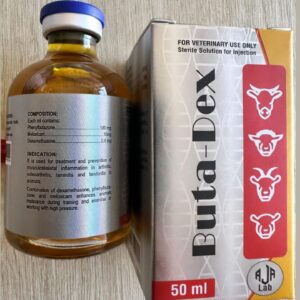
BUTA-DEX
Original price was: $40.00.$35.00Current price is: $35.00. Add to cart -
Anti-inflammatory & Corticosteroids
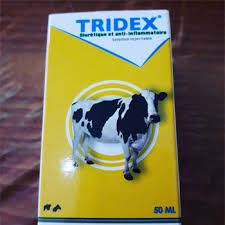
TRIDEX INJECTION
Original price was: $50.00.$45.00Current price is: $45.00. Add to cart

Reviews
There are no reviews yet.